 Robust DC Motor
Brush Motors remain useful wherever compact size, simple control, and strong starting torque matter. They appear in toys, power tools, vehicle accessories, and small industrial equipment. Their construction is familiar: a wound armature turns inside a magnetic field, while brushes and a commutator direct current to the rotating parts. That contact also creates wear, heat, and electrical noise. Small details matter.
The label “brush motor” covers several designs, not one interchangeable machine. Permanent-magnet DC motors suit compact, low-voltage devices. Series-wound motors deliver high starting torque, while shunt-wound designs offer steadier speed under changing loads. Compound-wound, universal, and printed-armature motors bring different trade-offs in torque, speed, size, and control. Gearmotors add a gearbox; coreless and ironless designs reduce rotor mass. Each choice has limits.
Stephen J. Chapman, author of Electric Machinery Fundamentals, is a recognized voice in electrical-machine education. A practical editorial takeaway, not a verbatim Chapman quotation, is: “Match the motor to the load, then check its operating limits.” That means considering voltage, duty cycle, cooling, noise, brush life, and available space—not just advertised speed. A motor spinning freely on a workbench may behave differently under a real load. It is easy to overlook that. This guide compares ten common types of Brush Motors, explains where each fits, and highlights the questions worth asking before selection. The categories can overlap, and product labels are not always consistent. A specification sheet is still essential.
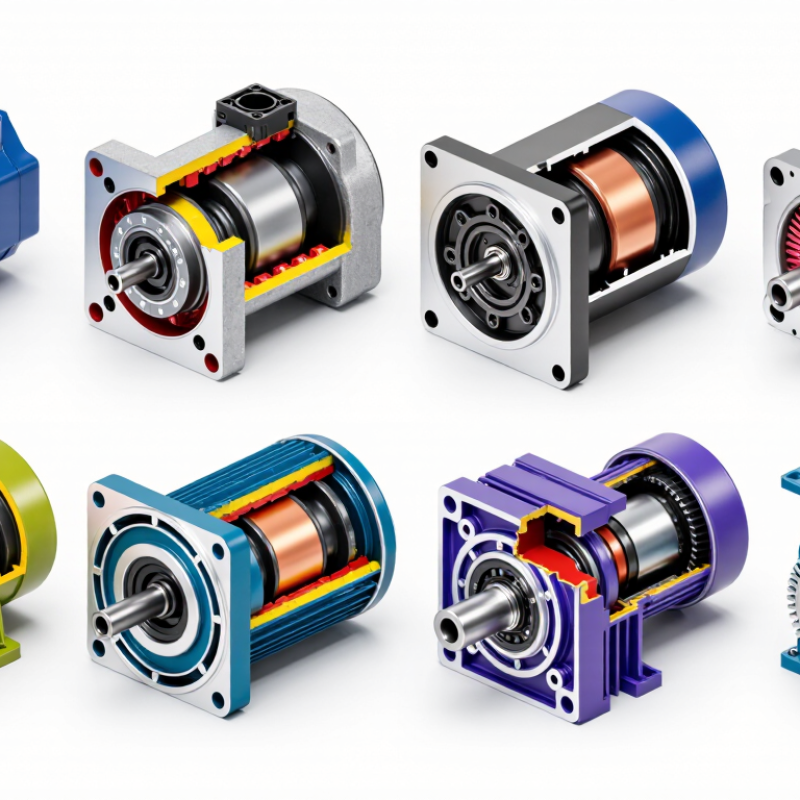
A brushed motor turns electrical input into shaft motion through a simple sequence. Current enters through carbon brushes, which press against a segmented copper commutator on the rotating armature. The commutator routes current through the armature coils and reverses its direction as the rotor turns. This keeps the armature’s magnetic field interacting with the stator field, producing torque. That is the basic trick. In a small motor, you can picture the brushes riding over the copper segments while the shaft spins a fan or tool attachment.
The U.S. Department of Energy’s 2014 Improving Motor and Drive System Performance: A Sourcebook for Industry reports that motor-driven systems use about 68% of electricity in U.S. manufacturing. That figure covers industrial motor systems broadly, not brushed motors alone, but it shows why conversion losses matter. In a brushed design, friction and electrical resistance at the brush-commutator contact create heat and gradual wear. The motor’s speed and torque also depend on its winding design and applied voltage. Small parts matter. The mechanism is useful, though not perfectly efficient or maintenance-free; brush dust and contact wear can complicate performance in real equipment.
| Type | How It Is Configured | Typical Characteristics | Common Uses |
|---|---|---|---|
| Permanent-magnet DC (PMDC) | Permanent magnets provide the stator field; a commutator and brushes switch current in the rotor windings. | Compact, simple, and easy to control by adjusting the supply voltage. Available torque and speed depend on the motor design and load. | Small appliances, toys, automotive accessories, and compact actuators. |
| Series-wound DC | The field winding is connected in series with the armature, so the same current flows through both. | Produces high starting torque. Speed can rise to a damaging level with little or no load, so it generally needs an appropriate load or speed control. | Traction applications, lifting equipment, and tools designed for high starting torque. |
| Shunt-wound DC | The field winding is connected in parallel with the armature supply. | Provides relatively steady speed as load changes, when operated within its rated conditions. | Machine tools, fans, and other drives that benefit from fairly consistent speed. |
| Compound-wound DC | Combines series and shunt field windings, blending features of both arrangements. | Can provide stronger starting torque than a shunt motor while maintaining better speed regulation than a series motor. | Elevators, presses, conveyors, and industrial drives requiring a balance of starting torque and speed stability. |
| Separately excited DC | The field winding is powered by a separate supply from the armature. | Field strength and armature voltage can be controlled independently, allowing a broad range of speed and torque control. | Adjustable-speed industrial drives and laboratory or test equipment. |
| Universal motor | A series-wound commutator motor designed to operate on either AC or DC power. | Offers high speed and strong power for its size. Brush and commutator wear, noise, and electrical interference are design considerations. | Portable power tools, mixers, and some vacuum cleaners. |
| Coreless (ironless-rotor) brushed motor | The rotor winding is formed without a conventional iron core; it typically operates in the field of permanent magnets. | Low rotor inertia supports quick acceleration and response. Continuous-current and heat limits depend on its construction and cooling. | Precision instruments, small pumps, and responsive servo or actuator systems. |
| Iron-core brushed DC motor | The armature windings are carried on a laminated iron core, a common construction for brushed motors. | Robust and widely adaptable, with performance determined by its magnetic design, winding, and cooling. The iron core adds rotor mass. | General-purpose drives, appliances, and industrial equipment. |
| Printed-armature (pancake) motor | A flat, disk-shaped armature uses printed or formed conductors and a commutator, producing a short axial profile. | Its low-profile rotor can have low inertia and fast response; torque and thermal capacity vary with size and design. | Compact mechanisms, instrumentation, and applications with limited axial space. |
| Brushed DC servo motor | A brushed DC motor is used with position or speed feedback and a controller as part of a servo system. | Feedback enables controlled positioning or speed regulation. The servo behavior comes from the complete motor, sensor, and control system. | Robotics, positioning stages, and automated mechanisms. |
How motion is produced: Current in the armature conductors interacts with the motor’s magnetic field to create torque. As the rotor turns, the brushes contact commutator segments that switch the armature current, helping keep the torque directed around the rotation. These categories describe different design or system features, so some can overlap.
Current passes through carbon brushes and a segmented copper commutator. The commutator sends current through coils on the rotating armature. This interaction with the stator’s magnetic field creates torque. The shaft turns.
Brushes press against copper segments as the rotor spins. The commutator routes and reverses current in the armature coils. That keeps the magnetic interaction producing motion. Contact also creates friction and heat.
Permanent-magnet motors are compact and suit moderate loads. Series-wound motors provide strong starting torque, but their speed can rise under light loads. Shunt-wound designs hold speed more steadily. Compound-wound motors combine traits of both.
Universal motors can run on AC or DC and reach high speeds. They may also be noisier and experience more brush wear. Separately excited motors allow the field current to be controlled independently. Useful, but not magic.
Iron-core motors are robust, though their rotors have greater inertia. Coreless motors can accelerate quickly and reduce cogging. Their delicate windings need careful handling. Small parts matter.
Not necessarily. “Pancake” describes a flat motor profile, which can help in tight spaces. Printed-armature motors use a thin disc rotor. Shape and electrical design are different things.
Brush contact creates friction and electrical resistance, producing heat and gradual wear. Brush dust can also complicate performance. Their speed and torque depend on winding design and applied voltage. Maintenance still matters.
Check starting load, speed stability, heat, duty cycle, and access for maintenance. Nameplate power alone can be misleading. A motor may suit a bench test but struggle after repeated starts. I would not treat any single rating as a perfect rule.
No such conclusion follows from the broad estimates. Motor-driven systems use about 68% of U.S. manufacturing electricity, while a global estimate is roughly 45% of electricity. These figures cover motor systems broadly, not brushed motors alone. The distinction is easy to miss.
Brush Motors convert electrical energy into motion through the interaction of magnetic fields and electric current. As the rotor turns, brushes make contact with the commutator, directing current through the windings and helping maintain rotation. The armature, commutator, brushes, magnets or field windings, and housing each contribute to the motor’s operation. Together, these components influence how a motor starts, produces torque, and responds to changes in load.
The ten types of Brush Motors differ in their field and winding arrangements, size, speed characteristics, and control needs. These design differences make some types better suited to steady operation, while others offer strong starting torque or compact construction. Their applications range from small mechanisms and household equipment to automotive systems, tools, and industrial machinery. Understanding how each type works and performs can help readers compare motor designs and select an appropriate option for a particular task.
