 Robust DC Motor
Choosing the right Custom DC Motors manufacturer can shape a product’s performance, lifespan, and total operating cost. Global buyers often compare suppliers by torque accuracy, voltage stability, noise levels, thermal control, and production consistency. These details matter in robotics, medical equipment, automotive systems, packaging machines, and compact consumer devices.
This guide introduces ten manufacturers known for serving international markets and supporting varied motor requirements. The selection considers engineering experience, customization capabilities, quality systems, prototype support, delivery capacity, and after-sales communication. A reliable supplier should explain winding options, shaft dimensions, insulation grades, encoder compatibility, and expected service life without hiding technical limitations.
Real projects rarely follow a perfect specification sheet. They rarely do. A motor that performs well in a laboratory may behave differently inside a dusty factory or under repeated starts. Buyers should request test reports, sample units, drawing reviews, and clear acceptance standards before placing large orders. Certifications can support confidence, but they do not replace independent testing or practical evaluation.
The manufacturers discussed here may suit different priorities. One supplier may offer stronger engineering support, while another may provide better pricing for high-volume production. Some companies appear impressive online but respond slowly during technical discussions. That is worth noticing. Cost, customization depth, communication quality, and supply reliability should be judged together.
This overview is designed to help purchasing teams, engineers, and distributors ask better questions. It does not promise one universal winner. Your application, market, and risk tolerance will determine the best choice.
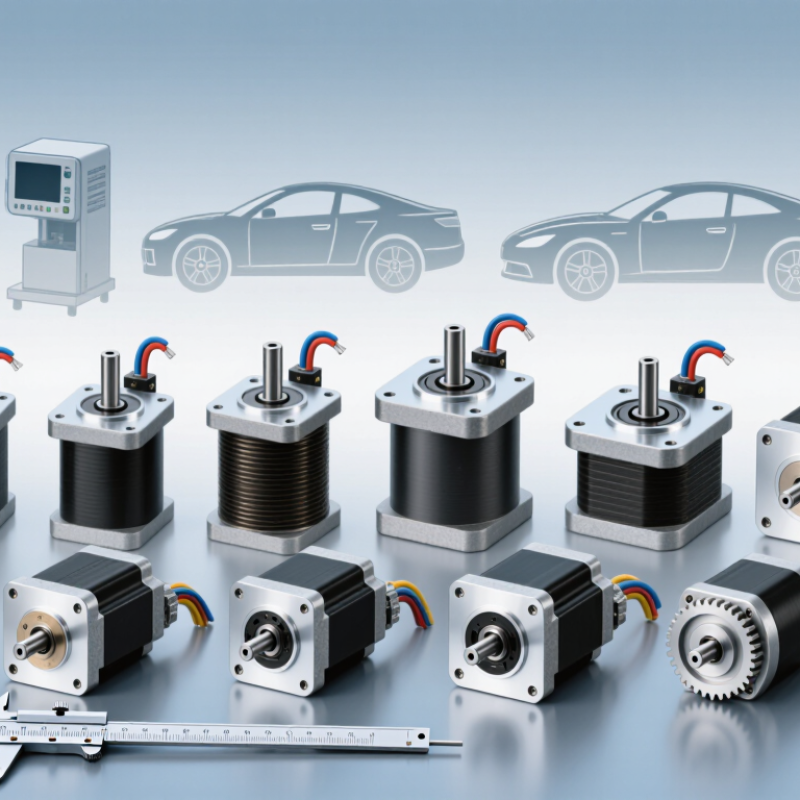
Custom DC motors are engineered for a defined voltage, speed, torque, and installation space. Unlike standard units, they can use tailored windings, shafts, bearings, magnets, and feedback sensors. This flexibility supports compact equipment and demanding duty cycles. It also creates more design responsibility.
The International Energy Agency reports that electric motor systems consume roughly 53% of global electricity. The U.S. Department of Energy adds that motor-driven equipment uses about 43–46% of industrial electricity in American manufacturing. These figures explain why buyers compare efficiency, heat control, service life, and control accuracy when reviewing custom motor manufacturers.
Applications range from conveyor systems and robotic joints to medical pumps, automated valves, and battery-powered tools. A motor for a warehouse conveyor may need continuous torque and sealed bearings. A surgical pump requires smoother rotation, lower vibration, and strict dimensional consistency. Industrial testing experience shows that the “best” supplier depends on the load profile, not reputation alone. That point is easy to overlook.
IEC 60034 testing principles can support comparisons involving temperature rise, efficiency, and operating performance. Buyers should request torque-speed curves, endurance results, noise measurements, and sample inspection records. Supplier claims still need verification. Sometimes a cheaper motor wins during testing, then fails under dust, heat, or repeated starts. Customization is useful, but overengineering can increase cost without improving the application.
| Rank | Anonymized Manufacturer Profile | Custom DC Motor Type | Typical Voltage Range | Typical Power Range | Speed Range | Key Customization Options | Common Industrial Applications | Relevant Compliance Requirements |
|---|---|---|---|---|---|---|---|---|
| 1 | Profile A — High-volume precision supplier | Brushed permanent-magnet DC motor | 6–48 V DC | 10–500 W | 1,000–12,000 rpm | Shaft geometry, winding, magnets, bearings, connectors, encoder | Material handling, pumps, office automation, small appliances | RoHS, REACH, EMC, applicable machinery and electrical safety standards |
| 2 | Profile B — Compact motion specialist | Coreless DC motor | 3–24 V DC | 0.5–100 W | 3,000–30,000 rpm | Low-inertia rotor, winding resistance, commutation, miniature housing | Medical instruments, laboratory equipment, camera systems, robotics | RoHS, REACH, EMC, product-specific medical or laboratory requirements |
| 3 | Profile C — Geared actuator manufacturer | DC gearmotor | 6–36 V DC | 5–750 W | 10–500 rpm output | Gear ratio, planetary or spur gearing, brakes, limit switches, encoders | Electric actuators, access systems, automotive mechanisms, lifting equipment | RoHS, REACH, EMC, IP protection testing, automotive requirements where applicable |
| 4 | Profile D — Brushless motion supplier | Brushless DC motor | 12–72 V DC | 20 W–3 kW | 500–20,000 rpm | Hall sensors, sensorless control, winding, rotor balance, thermal protection | Fans, pumps, AGVs, power tools, industrial automation | RoHS, REACH, EMC, motor-controller compatibility, insulation and thermal testing |
| 5 | Profile E — High-torque industrial supplier | Permanent-magnet DC motor | 12–180 V DC | 250 W–5 kW | 500–6,000 rpm | High-current brushes, cooling, shaft extension, mounting, brake integration | Conveyors, winches, hoists, industrial pumps, mobile machinery | IEC motor testing, EMC, RoHS, REACH, insulation and overload protection requirements |
| 6 | Profile F — Medical and clean-equipment supplier | Low-noise brushed or brushless DC motor | 3–48 V DC | 1–300 W | 500–15,000 rpm | Low acoustic noise, sterilization-compatible materials, sealed bearings, feedback | Ventilators, infusion equipment, dental tools, diagnostic instruments | RoHS, REACH, EMC, applicable medical-device quality and risk-management requirements |
| 7 | Profile G — Automotive actuator supplier | Automotive-grade DC gearmotor | 9–32 V DC | 20–800 W | 20–8,000 rpm | EMC shielding, position sensing, sealed housing, temperature and vibration resistance | Seat adjustment, window lifts, HVAC actuators, wipers, locks and latches | Automotive EMC, environmental, vibration, IP and quality-management requirements |
| 8 | Profile H — Robotics and servo supplier | Encoder-equipped brushless DC motor | 24–80 V DC | 50 W–2 kW | 100–10,000 rpm | Absolute or incremental encoder, low cogging torque, brake, precision balancing | Robotic joints, AGVs, CNC auxiliary axes, warehouse automation | EMC, functional safety where applicable, RoHS, REACH and machinery requirements |
| 9 | Profile I — Harsh-environment supplier | Sealed DC motor or gearmotor | 12–96 V DC | 30 W–1.5 kW | 50–10,000 rpm | IP-rated enclosure, corrosion protection, reinforced bearings, thermal sensors | Outdoor equipment, agricultural machinery, marine systems, process machinery | Ingress protection testing, EMC, corrosion and environmental testing, RoHS and REACH |
| 10 | Profile J — Cost-efficient volume supplier | Standardized custom-frame DC motor | 3–60 V DC | 1–1,000 W | 800–18,000 rpm | Mounting pattern, cable length, connector, shaft, terminal configuration | Consumer products, vending machines, printers, small pumps and fans | RoHS, REACH, EMC and destination-market electrical safety requirements |
Note: The manufacturer names are intentionally anonymized. The specifications represent commonly documented engineering ranges for custom DC motor categories; final ratings depend on the selected design, duty cycle, cooling method, environment and testing requirements.
It is designed for specific voltage, speed, torque, and installation space. Its windings, shaft, bearings, magnets, or sensors may be tailored. More flexibility means more design responsibility.
Common uses include conveyors, robotic joints, medical pumps, automated valves, and battery-powered tools. A conveyor may need sealed bearings and continuous torque. A precision pump needs smooth rotation and low vibration.
Share voltage, continuous torque, peak load, speed range, duty cycle, noise limits, and available space. Include temperature, dust exposure, and repeated-start conditions. Small omissions can cause large problems.
Motor systems consume a large share of industrial electricity. Measured efficiency can reduce heat and long-term energy costs. Ask for efficiency curves, not only estimated percentages.
Request torque-speed curves, temperature-rise data, endurance results, noise measurements, and sample inspection records. Test startup current and stall protection. Repeat the test.
Two prototypes can reveal inconsistent materials, dimensions, vibration, or electrical performance. One sample may hide a production variation. That risk is easy to miss.
Sometimes, but price alone proves little. A low-cost motor may fail after repeated starts, dust exposure, or high heat. A higher-priced design may also be overengineered. Testing should decide.
Confirm winding traceability, final inspection records, material consistency, and change-control procedures. Ask how design revisions will be communicated. Promises need evidence.
Compare total ownership cost, lead time, warranty terms, compliance evidence, and regional logistics. Review technical support and realistic tolerances. Reputation helps, but load data matters more.
Be cautious when specifications sound impressive but weaknesses remain unexplained. A practical supplier should admit when a design needs revision. Perfect claims deserve questions.
Custom DC Motors are engineered to meet specific requirements that standard motors may not satisfy, including precise dimensions, torque, speed, voltage, efficiency, noise control, and environmental resistance. They are widely used in automation equipment, medical devices, robotics, transportation systems, renewable energy solutions, industrial machinery, and other applications where reliable and tailored motion performance is essential. This article explains how buyers can assess international manufacturers based on engineering expertise, customization capabilities, production capacity, quality management, testing procedures, delivery reliability, communication, and after-sales support.
It also presents a practical framework for comparing suppliers by examining motor design, operating performance, material selection, manufacturing consistency, and quality assurance. Rather than focusing only on price, global buyers should consider total value, including technical consultation, prototype development, scalability, documentation, service responsiveness, and long-term supply stability. By matching a manufacturer’s capabilities with the project’s technical, commercial, and compliance requirements, buyers can select a dependable Custom DC Motors supplier for both current production needs and future product development.
